The Science of Sand: Why Some Sand Builds Better
Top Block
Ever wonder why that sandcastle crumbled while your neighbor's tower stands strong? It's not luck—it's physics you can control. Understanding the science behind sand behavior transforms you from hoping your build works to knowing it will. The key factors are surface tension bonds, optimal moisture ratios, and grain size characteristics that vary across every beach.
Snippet Answer Block
Sand grains stick together through surface tension from water bridges between particles. The optimal ratio is 1 part water to 8 parts sand [SRC-001]—roughly a cup per bucket. Grain size determines bond strength, and beach location affects all these factors, making some spots ideal for building while others guarantee collapse.
The Physics of Sand That Sticks
When you grab that handful of sand, you're witnessing physics in action. Sand grains stick together through surface tension—the same force that makes water bead on a leaf [SRC-001]. Water creates microscopic bridges between individual grains, and these bridges are what hold your sandcastle together.
Scientific research on optimal sandcastle construction found the magic ratio: 1 part water to 8 parts sand [SRC-001]. In practical terms, that's about a cup of water for every bucket of sand—roughly what you'd wring out of a wet beach towel.
Why this works: Surface tension creates the invisible bonds that hold your sandcastle together. Too little water means no bridges form between grains. Too much water fills the air pockets completely, making sand flow like liquid instead of holding structural shape.
The physics here is capillary forces at work. When moisture content hits that sweet spot, water creates strong meniscus bridges between grains without overwhelming the structure. The squeeze test becomes your practical application of this science: grab a handful, compress firmly, open your hand. It should hold shape but not drip water.
For crisp results: Optimal moisture creates a narrow range where sand behaves like wet concrete—moldable when compressed, stable when released. This zone exists between bone-dry sand (no bonds) and oversaturated sand (no structure).
Beach Section Science: Why Location Matters
Not all beach sand is created equal, and the physics explains why. Beach morphology research shows that sand characteristics vary dramatically across a single beach [SRC-002], creating distinct building zones most builders miss.
| Beach Section | Grain Size | Moisture Level | Physics Result | Best For |
|---|---|---|---|---|
| Swash Zone | Coarsest | Always saturated | Heavy, flows easily | Drip castles |
| Berm | Moderate | Variable moisture | Optimal packing zone | Traditional builds |
| Backshore | Finest | Dry, needs wetting | Best detail work | Carving/finishing |
The swash zone where waves wash up contains the coarsest grains because wave action sorts particles by size. Large grains settle first while fine particles get carried further inland. These coarse grains drain quickly but also have fewer contact points for surface tension bonds.
The berm zone—that flat area mid-beach—becomes the Goldilocks zone. Moderate grain size means better packing characteristics with optimal surface area for water bridges. This is where most successful traditional sandcastle building happens.
The backshore near dunes contains the finest grains, wind-sorted and bone dry. Once manually wetted, these fine grains offer maximum surface area for incredibly strong bonds—perfect for detailed carving work.
For crisp results: Start your build in the berm zone for the foundation, then harvest backshore sand for detail work. Understanding grain sorting means choosing your build location based on physics, not just convenience.
Grain Size Science: The Building Sweet Spot
Sediment analysis in the Santa Cruz area shows the "cutoff diameter" for beach sand is approximately 0.18mm [SRC-003]. This seemingly technical detail determines everything about how your sand behaves.
Fine grains create more surface area for water bridges to form. Think of it like Velcro—more hooks mean stronger attachment. Coarse grains have fewer contact points and drain faster, weakening those critical surface tension bonds.
Why this works: Grain size affects both the number of contact points between particles and how quickly water drains through the structure. Fine sand = more bonds = stronger castle, but only if moisture stays optimal.
You can identify grain size by feel without measuring tools. Sugar sand feels smooth and silky—these are fine grains perfect for detailed work once wetted. Gritty, coarse sand feels rough and drains water quickly—better for quick builds but harder to maintain moisture.
The physics advantage of fine sand comes with a trade-off: it holds moisture longer, giving you a wider working window, but requires more precision in initial water ratios.
The Bonn Law in Practice: Perfect Water Ratios
The 1:8 water-to-sand ratio isn't just theory—it's practical physics you can apply immediately [SRC-001]. This ratio creates optimal capillary bridges without oversaturating the structure.
Here's how to achieve this ratio at the beach: Fill your bucket with sand, then add about one cup of water. If using a standard beach pail (roughly 1 liter capacity), that's about 125ml of water. But rather than measuring precisely, use physics as your guide.
Try this now: The squeeze test gives you instant feedback on moisture ratios. Grab sand from palm-deep (not the surface), add water if needed, squeeze firmly for 3 seconds, then open your hand. Perfect ratio = holds shape without dripping.
Why doesn't more water automatically mean better building? Physics explains the counterintuitive truth: excess water fills air pockets that provide structural integrity. Instead of water bridges between grains, you get continuous water films that act like lubricant, making sand flow rather than stack.
For crisp results: Aim for that narrow zone where water creates bridges without filling all the air space. Too dry and grains can't bond; too wet and physics works against you by eliminating the very air pockets that give structure stability.
Common Physics Mistakes That Cause Collapse
Understanding the science helps you avoid the physics traps that doom most sandcastles. Here are the critical mistakes that fight against the laws of nature:
• Building too-thick layers - Anything over 2-3 inches creates trapped air pockets that become structural weak points. Physics demands thin, well-compacted layers.
• Skipping the squeeze test - Without checking moisture content, you're building on sand that may have zero structural bonds between grains.
• Ignoring compaction physics - Loose sand contains too much air space for water bridges to create structural integrity. Every layer needs compression.
• Building in the wrong zone - Fighting beach physics by choosing locations where grain size and moisture work against your build type.
The collapse physics is predictable: inadequate compaction creates void spaces, improper moisture prevents bonding, and thick layers concentrate stress at weak points. Each mistake compounds the others until gravity wins.
Pro Physics: Advanced Sand Behavior
Once you understand basic sand science, advanced techniques become logical applications of physics principles [SRC-004].
The 45-degree cut technique isn't arbitrary—it's the angle of repose for moist sand. Cutting at this angle creates edges that naturally resist crumbling when you stack the next layer. Steeper cuts fight physics and create unstable overhangs.
Compaction layering follows structural engineering principles. Build in thin layers, compact each one, then add the next. This eliminates void spaces systematically and distributes structural loads properly.
Temperature affects your water bridges too. Hot sand evaporates moisture quickly, breaking those crucial surface tension bonds. Cool, shaded building areas maintain optimal moisture longer.
For crisp results: Advanced builders work with physics, not against it. Use the natural angle of repose, build systematically in layers, and choose conditions that support rather than fight the science.
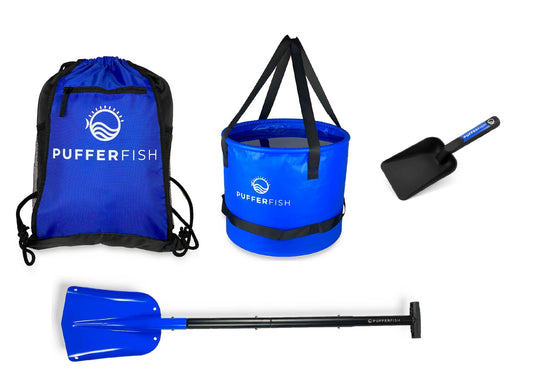
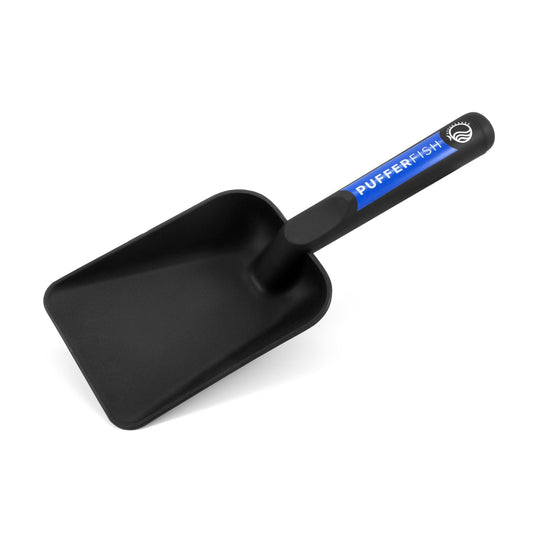
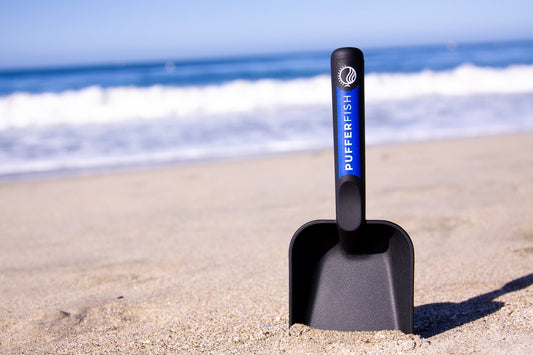
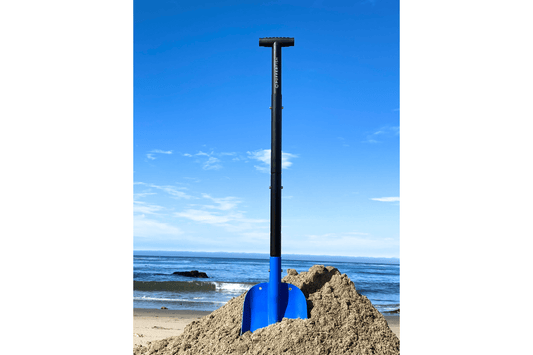
Why this helps: Tools like the Super Scoop make compaction more effective because the flat back design creates even pressure distribution across the sand surface, improving the physics of layer bonding.
Understanding sand science transforms building from guesswork to predictable results. When you know why techniques work, you can adapt to any beach conditions with confidence.
FAQ
Q: Why do some beaches have better sand than others?
A: Beach sand quality depends on grain size, sorting, and mineral composition. Wave action and geological sources determine these characteristics. Fine, well-sorted sand from certain rock types creates optimal building conditions, while coarse or mixed-grain sand from different sources may drain too quickly or lack proper bonding characteristics.
Q: How do I know if beach sand is good without building first?
A: Use the squeeze test immediately. Grab sand from palm-deep in the berm zone, add water if dry, squeeze firmly, and open your hand. Good sand holds shape without dripping. Also feel the texture—fine, smooth sand generally outperforms gritty, coarse sand for building.
Q: Why does my sandcastle collapse even with wet sand?
A: "Wet sand" isn't specific enough. Sand can be oversaturated (too much water, causing flow) or undersaturated (not enough bonding). The physics requires that narrow zone where water creates bridges without filling all air pockets. Use the squeeze test to find optimal moisture.
Q: Do different sand colors affect building quality?
A: Color indicates mineral composition, which affects grain shape and bonding characteristics. Dark sand often contains more angular, volcanic grains that lock together well. Light sand from quartz or coral may be more rounded and drain faster. Test each beach individually rather than assuming based on color.
Q: Why do sandcastles crack as they dry?
A: As water evaporates, surface tension bonds weaken and disappear. The structure shrinks slightly, creating stress cracks. This is why professional sand sculptors use additives or continuous misting—they're fighting the physics of evaporation that inevitably breaks down water bridges.
Q: Can I improve bad sand with technique?
A: Physics limits what technique can overcome. Extremely coarse sand will always drain too quickly for stable building. However, understanding optimal moisture ratios, proper compaction, and strategic water management can maximize the potential of marginal sand. Choose your battles based on the science.
Related Links
Learn more in our complete guide to what sand is made of for the geological science behind sand composition. Ready to apply this science? Check out our step-by-step sandcastle building guide that puts these physics principles into practice.